Articles
-
 Article
Faecalibacterium prausnitzii, depleted in the Parkinson’s disease microbiome, improves motor deficits in α-synuclein overexpressing mice
Gut microbiome composition is altered in Parkinson’s disease (PD), the fastest-growing neurological condition, that is characterized by neurodegeneration, motor dysfunction, and is frequently accompanied by gastrointestinal (GI) symptoms.
-
 Article
Gut microbiome composition and function reflect socioeconomic deprivation
Socioeconomic status (SES) correlates with adverse health outcomes, but the underlying biological mechanisms remain unclear. We examined how area-level deprivation (Townsend Deprivation Index) influences gut microbiome composition and function and whether the gut microbiome mediates the effects of deprivation on metabolic and mental health.
-
 Article
Informed Therapeutic Microbiome Modulation for Post-Infectious Irritable Bowel Syndrome: Pilot Experience of a Microbiome Clinic
Untargeted microbiome modulation has achieved conflicting results in post-infectious irritable bowel syndrome (PI-IBS).
-
 Article
Fecal microbiota transplantation plus immunotherapy in non-small cell lung cancer and melanoma: the phase 2 FMT-LUMINate trial
Immune checkpoint inhibitors (ICI) have improved outcomes for patients with non-small cell lung cancer (NSCLC) and melanoma, yet over half of patients exhibit primary resistance.
-
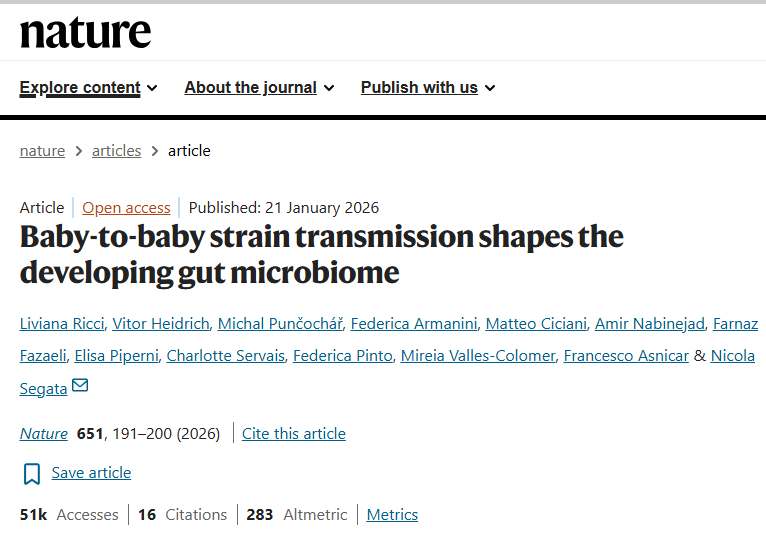
 Article
Baby-to-baby strain transmission shapes the developing gut microbiome
The early infant microbiome is largely primed by microbial transmission from the mother between birth and the first few weeks of life1,2,3, but how interpersonal transmission further shapes the developing microbiome in the first year remains unexplored. This study shows that microbiome transmission between babies is extensive during the first year of nursery, and points to social interactions in infancy as crucial drivers of infant microbiome development.
-
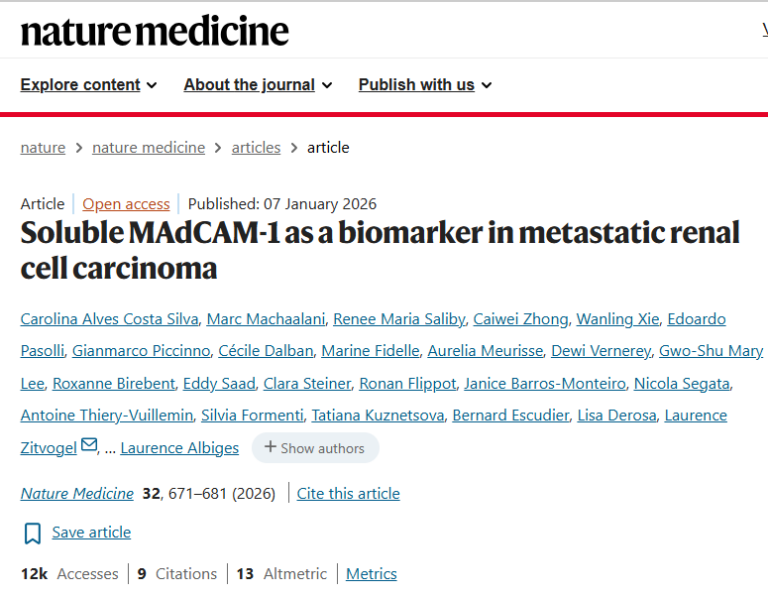
 Article
Soluble MAdCAM-1 as a biomarker in metastatic renal cell carcinoma
Patients with metastatic renal cell carcinoma treated with immune checkpoint inhibitors or antiangiogenic tyrosine kinase inhibitors may develop resistance driven by gut dysbiosis, which disrupts the MAdCAM-1–α4β7 axis and promotes the recruitment of immunosuppressive IL-17-producing T regulatory (Tr17) cells into tumors. Notably, low sMAdCAM-1 levels were associated with an immunosuppressive gut microbiota profile dominated by Enterocloster species. Therefore, sMAdCAM-1 deserves further investigations as a biomarker-guided tool for microbiota-targeted interventions.
-
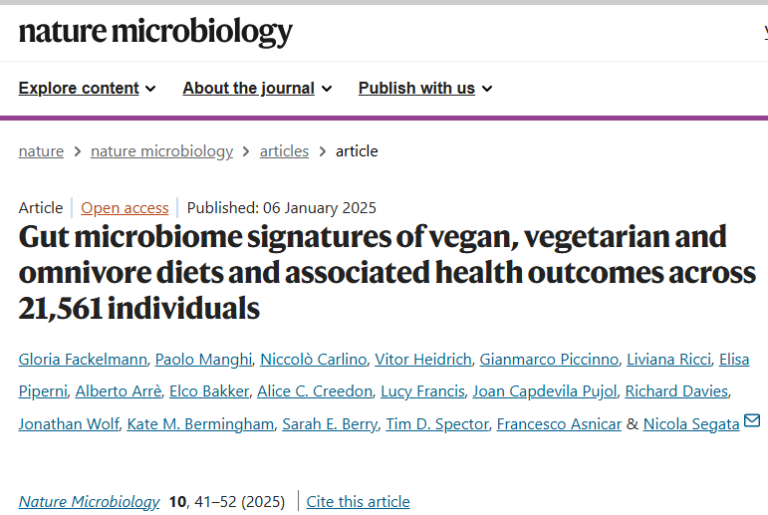
 Article
Gut microbiome signatures of vegan, vegetarian and omnivore diets and associated health outcomes across 21,561 individuals
Diet-specific gut microbes partially overlapped with food microbiomes, especially with dairy microbes, for example, Streptococcus thermophilus, and typical soil microbes in vegans. The signatures of common western diet patterns can support future nutritional interventions and epidemiology.
-
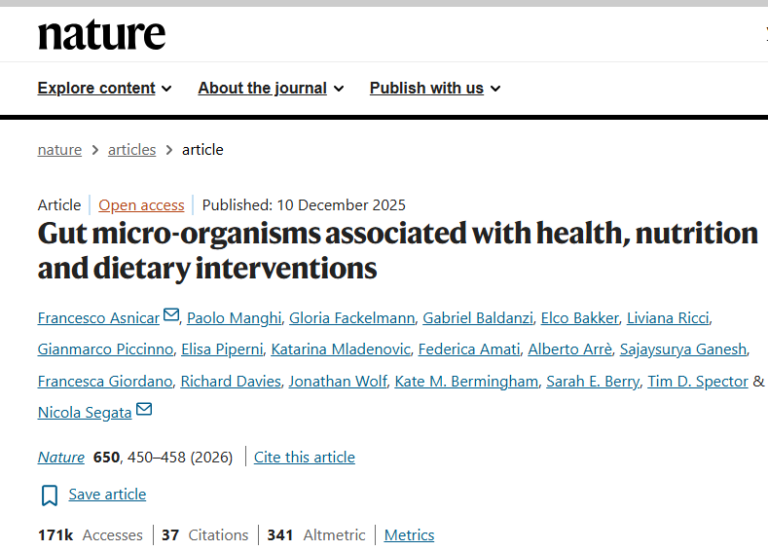
 Article
Gut micro-organisms associated with health, nutrition and dietary interventions
The incidence of cardiometabolic diseases is increasing globally, and both poor diet and the human gut microbiome have been implicated1. However, the field lacks large-scale, comprehensive studies exploring these links in diverse populations2.
-
 Article
Faecal metabolites as a readout of habitual diet capture dietary interactions with the gut microbiome
The interplay between diet and gut microbiome composition is complex. Faecal metabolites, the end products of human and microbial metabolism, provide insights into these interactions. Our findings reveal that faecal metabolites capture mediations between diet and the gut microbiome, advancing our understanding of diet-related disease risk and informing metabolite-based interventions.
-
 Article
Global genetic diversity of human gut microbiome species is related to geographic location and host health
The human gut harbors thousands of microbial species, each exhibiting significant inter-individual genetic variability. Although many studies have associated microbial relative abundances with human-health-related phenotypes, the substantial intraspecies genetic variability of gut microbes has not yet been comprehensively considered, limiting the potential of linking such genetic traits with host conditions.