Faecal metabolites as a readout of habitual diet capture dietary interactions with the gut microbiome
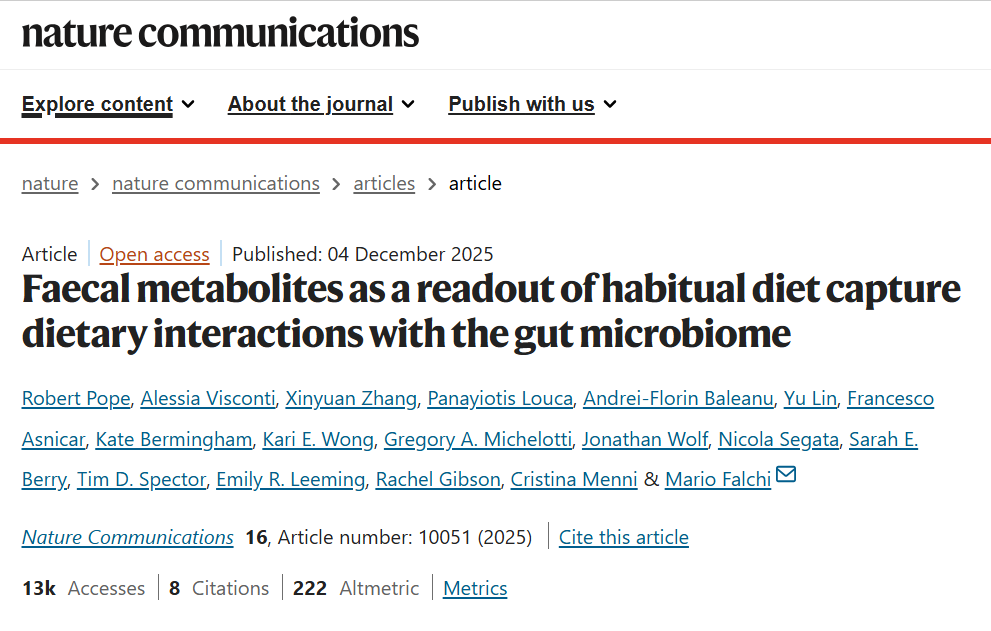
The interplay between diet and gut microbiome composition is complex. Faecal metabolites, the end products of human and microbial metabolism, provide insights into these interactions.
Our findings reveal that faecal metabolites capture mediations between diet and the gut microbiome, advancing our understanding of diet-related disease risk and informing metabolite-based interventions.
More articles
-
 Article
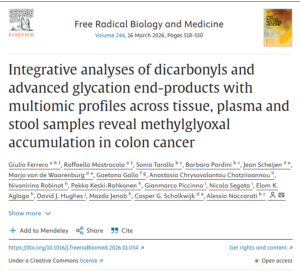
Integrative analyses of dicarbonyls and advanced glycation end-products with multiomic profiles across tissue, plasma and stool samples reveal methylglyoxal accumulation in colon cancer
This pilot integrative analysis highlighted novel coherent associations among tissue, circulating, and stool levels of MGO-derived AGEs, the expression of AGE-related metabolic pathways, and microbial signatures in colon cancer. If confirmed in larger studies, these candidate molecular and microbial interactions may provide novel insights into the dicarbonyl stress involvement in tumor biology.
-
 Article
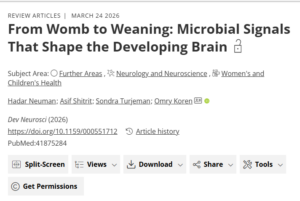
From Womb to Weaning: Microbial Signals That Shape the Developing Brain
This review synthesizes current knowledge on the temporal dynamics of gut colonization and brain maturation. Drawing on mechanistic insights from animal models, we emphasize the central role of the maternal microbiota and particularly, microbially derived metabolites that cross the feto-placental barrier and shape fetal brain development. We also discuss molecular and cellular targets of microbial influence, implications for neurodevelopmental disorders, and potential therapeutic strategies.
-
 Article
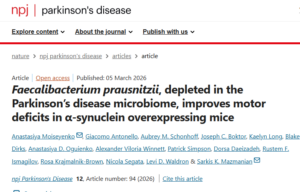
Faecalibacterium prausnitzii, depleted in the Parkinson’s disease microbiome, improves motor deficits in α-synuclein overexpressing mice
Gut microbiome composition is altered in Parkinson’s disease (PD), the fastest-growing neurological condition, that is characterized by neurodegeneration, motor dysfunction, and is frequently accompanied by gastrointestinal (GI) symptoms.